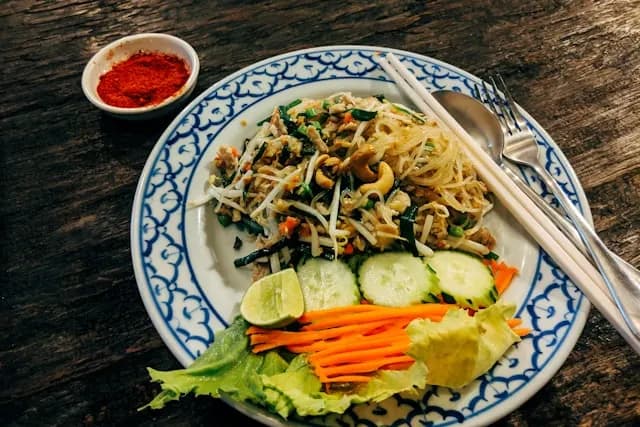

The inclusion of 'Thai' in a dish's name within Thailand, is itself a hint at a curious truth: Pad Thai might not be as quintessentially Thai as one might initially believe. Traditionally known as Gway Teow Pad Thai, the name can be dissected etymologically into two segments:
- Gway Teow, translating to "rice noodles" in Chinese
- Pad Thai, with 'Pad' meaning "fried" and 'Thai' signifying its association with Thailand
The original term, Gway Teow, has largely fallen out of use, yet its presence in the dish's original name offers a clue to its roots, suggesting a Chinese influence at its culinary inception. The method of stir-frying noodles, for instance, is thought to have been introduced to Thailand by Chinese immigrants centuries ago, and later wholeheartedly adopted by Thai cuisine. This integration has turned Pad Thai into a globally recognised emblem of Thai food, likely due to its mild spice level making it an ideal introduction to the vibrant world of Thai gastronomy for those unaccustomed to the region's potent spices.
But what's the story behind this beloved dish?
When Pad Thai was invented
To grasp the full narrative of Pad Thai's evolution, it's essential to journey back in time. The precise beginnings of Pad Thai are somewhat nebulous, yet there's a consensus among historians that its development was significantly influenced by Chinese immigrants. These individuals, arriving in Thailand either as settlers or traders in the 1700s, brought with them a wealth of culinary knowledge, including the art of stir-frying.
Pad Thai's transformation into a cornerstone of Thai cuisine, however, is a relatively recent phenomenon, cemented during a notably tumultuous chapter in both Thailand's and the world's history: World War II. This period marked a turning point for the dish, elevating it from a simple recipe to an integral part of Thailand's national identity.
During the early 20th century, Thailand was immersed in a wave of nationalism, striving to modernise and Westernise while nurturing a strong sense of national identity. A pivotal element of this movement was the culinary domain. The concept of creating a national dish emerged as a strategy to unite the Thai population, aiming to instil a collective sense of belonging amongst the population.
Plaek Phibunsongkhram, a key figure in Thailand's political history, is often hailed as the architect behind Pad Thai's prominence. Serving as Prime Minister from 1938 to 1944 and then resuming the role between 1948 and 1957, his leadership was instrumental in elevating the dish from a simple stir-fry to a symbol of Thai unity and identity. His initiatives were part of broader efforts to forge a cohesive national culture, with Pad Thai at the culinary forefront.